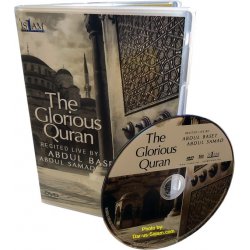
Shaykh Abdul Basit Abdus-Samad is, for a great many Muslims, simply what the Quran sounds like. His recordings have been played in homes, masajid and broadcasts across the world for over half a century, and no reciter since has displaced him in the affection of listeners.
Why a Live Recording Is Different
A studio recitation is technically perfect and slightly distant. A live one has an audience in it — you hear the room respond, and you hear the reciter respond to the room.
Abdul Basit was famous for exactly that. He would extend a passage, return to a verse, and hold a note for a length that seems impossible, reading the congregation as he went. Those moments are what people mean when they talk about his recitation, and they only exist in live recordings.
What Made Him Exceptional
Extraordinary breath control, complete command of the maqamat, and an instinct for where the meaning of a verse should be allowed to sit. He was appointed the first president of the Reciters' Union in Egypt, and his mastery of Tajweed was as complete as his voice.
Who It Is For
Any Muslim household. It is also among the more effective things to play for a non-Muslim who has never heard the Quran recited — the response is usually not what they expected.



 (1)
(1)