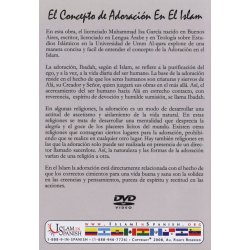
This is the Spanish-language DVD “El Concepto de Adoración en el Islam” (“The Concept of Worship in Islam”), presented by Muhammad Isa García — an Argentinian-born writer with degrees in Arabic language and Islamic theology from Umm Al-Qura University — explaining the concept of worship (Ibadah) in Islam concisely and accessibly.
What “Ibadah” Means
According to Islam, worship (Ibadah) refers both to the purification of the ego and to the whole of a person’s daily life. Its foundation rests on the fact that human beings are creatures and servants of Allah, their Creator and Lord, who will judge their deeds in the Hereafter. Drawing close to Allah with reverence, devotion and humble submission is what is meant by Ibadah.
How Islam’s View Differs
In some religions, worship develops an attitude of asceticism and withdrawal from ordinary life, or a mentality that looks down on lawful enjoyment. Others confine worship to designated places, or require the presence of a priest before it can be performed. In Islam, worship is directly tied to the idea that a sound life rests on firm belief, purity of spirit and uprightness in action — carried through all of daily life, not set apart from it.
Resumen en Español
En esta obra, el licenciado Muhammad Isa García, nacido en Buenos Aires, escritor y licenciado en Lengua Árabe y en Teología sobre Estudios Islámicos por la Universidad de Umm Al-Qura, expone de manera concisa y fácil de entender el concepto de la Adoración en el Islam. La Ibadah, según el Islam, se refiere a la purificación del ego y, a la vez, a la vida diaria del ser humano: su base reside en que los seres humanos son criaturas y siervos de Alá, su Creador y Señor, quien juzgará sus obras en el más allá. En algunas religiones la adoración se convierte en ascetismo y aislamiento de la vida, o se limita a ciertos lugares o a la presencia de un sacerdote; en el Islam, en cambio, la adoración está directamente ligada a que los cimientos de una vida buena y sana son la solidez de las creencias, la pureza de espíritu y la rectitud en las acciones.