Bengali is spoken by more than 230 million people, and Bangladesh alone has one of the largest Muslim populations of any country on earth.
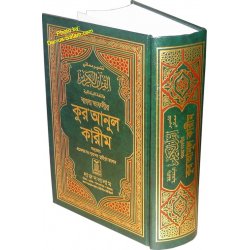
Two things distinguish this edition. The Arabic is large, which matters for a text meant to be recited as well as read. And it is set in the Persian (Indo-Pak) script familiar to readers from the subcontinent — the letterforms a Bengali reader learned in his own Quran classes, rather than the Uthmani script used in Arab editions.
That single choice makes the difference between a mushaf someone reads comfortably and one he has to decipher.
Translation on the facing side, explanatory notes at the foot of the page.
About These Translations
A translation carries the meaning of the Quran rather than the Quran itself, which remains the Arabic. That is why these editions place the Arabic text alongside the translation rather than replacing it — a reader recites from the original and understands from the facing page.
For anyone whose first language is not English or Arabic, reading the Quran's meaning in the language they actually think in makes a considerable difference. It is also among the most effective things a family can give an elderly relative or a new Muslim from that language background.
বাংলায় বিবরণ
নোবেল কুরআন বাংলা অনুবাদসহ — বড় আকারের আরবি লেখা ফারসি (ইন্দো-পাক) লিপিতে, বাঁ পাশে বাংলা অনুবাদ এবং পৃষ্ঠার নিচে টীকা।
দুটি বিষয় এই সংস্করণটিকে আলাদা করে। আরবি লেখা বড়, যা তিলাওয়াতের জন্য গুরুত্বপূর্ণ। আর এটি ফারসি লিপিতে ছাপা — উপমহাদেশের পাঠকেরা যে অক্ষরে কুরআন শিখেছেন, আরব সংস্করণের উসমানি লিপিতে নয়।
এই একটি সিদ্ধান্তই ঠিক করে দেয় যে মুসহাফটি স্বচ্ছন্দে পড়া যাবে, নাকি প্রতিটি অক্ষর মিলিয়ে নিতে হবে। বাংলা (বাংলাদেশ) বাংলাদেশের রাষ্ট্রভাষা।



 (7)
(7)