The change of format at Grade 7 marks a change of demand. A student here is old enough to be given evidence rather than conclusions, and the book treats him accordingly.
The same six areas continue, but the tafseer expects him to follow an argument about meaning, and the fiqh expects him to see why a ruling is what it is.
What the Series Sets Out to Do
Schools teaching Islamic studies in English have long had to assemble a curriculum from whatever was available at each level. Darussalam produced this series to answer that need: one book per grade, built as a single progression rather than as twelve unrelated titles.
Every grade covers all areas of Islamic studies — tafseer, hadeeth, tawheed, fiqh, seerah and general etiquette — treated at the depth the age allows, so a student meets each subject repeatedly across his schooling rather than once.
Arabic Terms Are Kept
Most Islamic terms are given in the original Arabic script, with transliteration and a translation of the meaning. The same applies to supplications that have to be memorized in Arabic.
The aim is that a student can read the original text and understand it, rather than learning an English substitute for a term and never meeting the word itself. Every effort has been made to ensure the material presented is authentic.
The Rest of the Series
Grade 1, Grade 2, Grade 3, Grade 4, Grade 5, Grade 6, Grade 8, Grade 9, Grade 10, Grade 11, Grade 12.
The complete set covers all twelve at a discount.



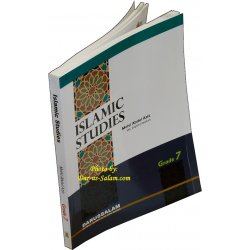
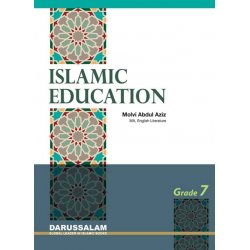
 (2)
(2)