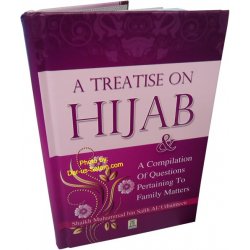
Nobody disputes the starting point. The modesty commanded by Islamic law — and by ordinary convention — includes the decency and decorousness expected of a woman, and conduct that keeps her well away from situations of temptation and suspicion.
The question this treatise addresses is what that requires in practice, and it argues a specific position: that the greatest act of modesty available to her is the hijab that covers the face. The author presents it as the best thing with which she can adorn herself, because it protects her and keeps her far from temptation.
Where This Sits Among Scholarly Views
Worth stating plainly, because a reader should know what he is buying.
The obligation of hijab is not disputed among the scholars of Ahlus Sunnah. Whether the face is included in what must be covered, or whether covering it is strongly recommended rather than obligatory, is a question on which qualified scholars have differed, with substantial evidence cited on both sides.
This treatise argues the first position, and argues it thoroughly. It is a work of advocacy in the scholarly sense — it makes a case and marshals the proofs for it.
How to Read It
Read it for the evidences it assembles, which is what a reader forming his own view actually needs. The verses, the narrations, and the practice of the women of the first generation are set out at length, and a reader can weigh them.
Anyone wanting the fuller picture of where scholars have differed should read this alongside a broader treatment rather than instead of one.
Who It Is For
Muslim women considering the niqab, and those who already wear it and would like to understand the reasoning behind it. Students of knowledge working through the question. Husbands and fathers who are asked about it. Teachers.
Related Reading