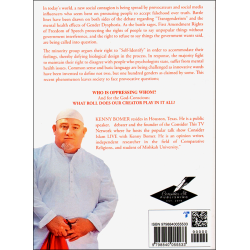
This book addresses one of the more contested public debates of recent years: how a society accommodates people whose religious convictions about gender differ from prevailing views, and what freedom of speech and conscience require in that situation.
The Argument It Makes
The author's position, indicated by the title, is that the right to self-identify and the right to disagree are separable. He argues that a person may decline to affirm a claim about gender while still being obliged to treat others with the dignity Islam requires of a Muslim toward every human being.
He examines First Amendment protections for speech and religious exercise, and argues that compelled affirmation of a belief is a different thing in kind from a prohibition on mistreatment.
The Islamic Framing
The book sets out the traditional Islamic understanding of the created distinction between male and female, the sources it rests on, and why it is not a position Muslims are able to revise as a matter of preference.
It also addresses what a Muslim's conduct toward others should be regardless of disagreement — which is the half of the subject most often left out of writing on either side.
Who It Is For
Muslims in the West navigating this question at work, at university or with family, and those in professions where it arises directly. It is written for readers who want their position argued rather than asserted.
Readers should know that this is an argumentative work taking a clear side, not a neutral survey.
Related Reading