




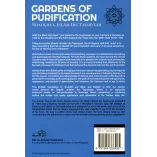
| Subtitle | رياض التزكية: دروب الزهد وتزكية النفس وتهذيب القلب |
| Author | Shaykhul-Islam Ibn Taymiyyah |
| Binding | Paperback |
| Pages | 336 |
| Size | 6.25x9.25x1.13" (16x23x2.80cm) |
| Edition | 1s (2016) |
| Weight (lbs) | 1.30 |
Gardens of Purification by Ibn Taymiyyah is a powerful Islamic book focused on cleansing the heart and soul. It provides deep insights into spiritual growth, sincerity, and self-discipline based on the Qur’an and Sunnah. This book is ideal for anyone seeking inner peace, stronger faith, and a closer connection with Allah.
From Author: This book teaches that true success lies in purifying the soul and aligning one’s life with the guidance of Allah. By removing spiritual diseases and adopting sincerity, patience, and good character, a believer can achieve inner peace and eternal success in the Hereafter.
Page: 01 -DAR AS-SUNNAH CLASSIC COLLECTION GARDENS OF PURIFICATION Paths to Asceticism, Purifying the Self Conditioning the Heart, Symptoms and Remedies Beauty of Patience, Pardoning and Avoidance SHAYKHUL-ISLAM IBN TAYMIYYAH رحمه الله سنة
Page: 02 - CONTENTS FOREWORD THE LIFE OF IBN TAYMIYYAH His Teachers 12 14 18 His Students The Praise of the Scholars for him 20 His Sayings His Death His Works CHAPTER ONE 24HL28 19 26 29 30 The Straight Path of Asceticism, Worship and Piety [1.1: The Importance of Adhering to the Sunnah] [1.2: The Meaning of Misguidance(dalal), Deviation (ghayy) and Right Guidance (rushd)] 34 tot [1.3: Following Desires] [1.4: The Ruling on Masturbation] 33 394 34 35 40 45 [1.5: The Obligation of Refraining from Prohibited Acts] 46 801 [1.6: Patience upon Afflictions] 48 [1.7: Patience in Acts of Obedience] 48 [1.8: The Trials] 50 381 [1.9: Repentance] [1.10: Guidance (al-Hidayab)] [1.11: What is intended by Traditions?] [1.12: The Explanation of 'Guidance'] [1.13: The Legal and Universal Will] [1.14: Following Desires and Whims] [1.15: The Explanation of 'Miserliness' (bukhl), Stinginess' (shubb) and 'Envy' (basad)] 51 51 52 55555 57 61 68
Page: 03 - Gardens of Purification [1.2 The Meaning of Misguidance (dalal), Deviation (gbayy) and Right Guidance (rushd)] Allah, the Most High, said: O مَا ضَلَّ صَاحِبُكُمْ وَمَا غَوَى "Your companion [Muhammad] has not strayed (dalla), nor has he deviated (ghawa)." [al-Najm (53): 2] Indeed, the Messenger did not go astray (dalla) or deviate (gbawa). The attribute of misguidance (dalal) is coupled with deviation (gbay) because every deviated (ghaw) is going astray (dal). Further to the point, right guidance (shd) is used to mean the opposite of deviation (ghay), while guidance (buda) is the opposite of misguidance (dalal). The meaning of 'Huda' is to avoid the path of the immoral (fujar) and people of innovation (abl al-bid'ab), which the righteous predecessors (salaf) used to prohibit-that is to say, immorality and innovation. Allah, the Exalted, said: خلف من بعدهم خَلْقُ أَجَاعُوا الصَّلَوَةَ وَاتَّبَعُوا الشَّهَوَاتِ فَسَوْفَ يَلْقَوْنَ غَيًّا "So they were followed by successors who neglected the prayer and followed desires. Thus they will be thrown into gbayyan." [Maryam (19): 59] The word 'gbayyan' is a verbal noun that means the opposite of right guidance (rushd), just as explained in the ayah wherein the two words were used as opposed to each other: 35
Page: 04 GARDENS OF PURIFICATION SHAYKHUL-ISLAM IBN TAYMIYYAH Allah the Most High Said: "And hasten to the forgiveness of your Lord and a Paradise as wide as the Heavens and the Earth prepared for those who fear Allah" [Aali "Imran: 133]. Citing his teacher Shaykh al-Islam Ibn Taymiyyah, Ibn Al-Qayyim said that, 'zuhd is to leave something that has no benefit for one's Hereafter. And wara' is to leave something for fear of harming one's Hereafter." Zuhd reflects a lack of want and desire for something, and wara' is to abstain from something and guard against potential hazards. Yet both of these qualities are nuanced, and the correct course to take in embracing asceticism and piety is to abstain from unlawful acts and desires while being moderate in all forms of worship. It is primarily known that adherence to the Sunnah preserves its followers from the blameworthy desirous self and the evil it harvests. Indeed, those who follow paths of religious innovation cannot escape falling into the traps of sin and being shackled by their chains, as this is a consequence of following desires. It is for this reason that innovators are called people of desires; and while the path of the Sunnah is paved with knowledge, justice, and guidance, the path of innovation is paved with ignorance, oppression, and the pursuit of speculation and whatever the desirous self is apt to want. This English translation of 'Al-Zuhd wal Wara' wal Ibadah' is from the shorter works penned by Shaykh al-Islam Ibn Taymiyyah. Within it, he signposts profound points on self-purification in thorough detail, presenting a refreshing outline the reader can easily appreciate and administer in his/her daily life. The author, Taqi Al-Din Abul-Abbas Ahmad ibn 'Abdu'l-Salam ibn Taymiyyah al-Harrani (d. 728h), was a leading Hanbali scholar and a Mujtahid in his own right. His breadth of learning and depth of understanding were accepted by all of his peers, and many of his biographers stated that he clearly surpassed the vast majority, if not all, of the scholars of his time. He was a prolific writer and skilled orator. He was deeply religious and unwavering in his adherence to Islam and the Sunnah, and repudiated all that opposed it.